Shares of the gadget maker Friday are down another 1.3% Friday to $107.61 — knocking the stock down 20% from its recent high of $134.54. The breathtaking decline not only puts Apple into a bear market - defined by a 20% drop — but has obliterated a staggering $150 billion in shareholder wealth from the top.
Just to put that into perspective, Apple's $150 billion decline is larger than 475 companies in the Standard & Poor's 500 are worth. A drop this big is the financial equivalent of wiping out the market value of entire companies like Pepsico (PEP) at $145 billion, International Business Machines (IBM) at $133 billion and Nike (NKE) at $111 billion.
Seeing such a massive decline in Apple carries more weight than a similar decline in any other stock would. Apple is still worth more than any other U.S. company — making it the most important stock in market measures like the S&P 500. Apple also is the most widely held stock by individual investors, says Sigfig, so the decline directly hits home.
Troubling signs pointing to weakening demand for smartphones continues to dog the stock. Analysts are cutting growth expectations for the fourth quarter — and even the first quarter — as they incorporate weaker demand. Despite efforts to diversify away from the mature smartphone market — Apple still gets a vast majority of its revenue and profit from smartphones.
A number of leading investment banks have been cutting earnings estimates on Apple along with price targets in some cases. Analysts on average now expect Apple to report adjusted quarterly profit of $3.24 a share in the fourth calendar quarter, down 1% from a month ago, says S&P Capital IQ. Estimates for profit in the first calendar quarter have been cut 2.4% from a month ago to $2.41.
Estimate cuts for Apple are very unusual. Estimates for fourth quarter calendar profits were boosted last December, as well as in March, June and November.
1. Computing Everywhere
As smart-phone technology advances, smart-phones will be used in new contexts and environments. Along with wearables, smart-phones will offer connected screens in the workplace and in public. User experience will be key.
2. The Internet of Things (IoT)
The Internet of Things is big and it will continue to grow along with user-oriented computing. Prediction: The Internet of Things will be the focus of digital business products and processes in industrial and operational contexts. Expect technology to be embedded everywhere.
3. 3D Printing
3D printing is about to get cheaper, and its market will grow over the next three years. The expansion will be biggest in industrial, biomedical, and consumer applications helping companies reduce costs.
4. Advanced, Pervasive, Invisible Analytics
Analytics will continue to grow propelled by the Internet of Things, creating large pools of data. Every app will need to be an analytic app. But big data isn’t the most important thing: instead we’ll need big questions and big answers.
5. Context-Rich Systems
Thanks to embedded intelligence and analytics, systems will become alert and responsive to their surroundings. Expect context-aware security as well as other trends.
6. Smart Machines
Analytics and context will pave the way for smart machines that can learn for themselves and act accordingly. These machine helpers will continue to evolve. Prediction: The smart machines era will be the most disruptive in the history of IT.
7. Cloud/Client Architecture
As mobile computing meets cloud computing, centrally coordinated applications that can be delivered to any device will continue to grow. Apps that can use intelligence and storage effectively will see lower bandwidth costs. Expect to be able to use applications simultaneously on multiple devices.
8. Software-Defined Infrastructure and Applications
Software defined networking, storage, data centers and security are maturing. Cloud service software is configurable thanks to rich APIs. Computing will have to move away from static models to deal with the changing demands of digital business.
9. Web-Scale IT
More and more companies will begin thinking like Amazon, Google and Facebook. As cloud-optimized and software-defined methods become mainstream, we’ll see a move towards web-scale IT, starting with DevOps.
10. Risk-Based Security and Self-Protection
While 100% security solutions aren’t feasible, advanced risk assessment and mitigation will come into play in the next few years. Security will move away from perimeter defense to multi-faceted approaches. Expect security aware application design, dynamic and static application security testing, and runtime application self-protection.
Logically, I know there isn’t a hulking four-armed, twisty-horned blue monster clomping in circles in front of me, but it sure as hell looks like it.
I’m sitting behind a workbench in a white-walled room in Dania Beach, Florida, in the office of a secretive startup called Magic Leap. I’m staring wide-eyed through a pair of lenses attached to what looks like metal scaffolding that towers over my head and contains a bunch of electronics and lenses. It’s an early prototype of the company’s so-called cinematic-reality technology, which makes it possible for me to believe that the muscular beast with the gruff expression and two sets of swinging arms is actually in the room with me, hovering about seven feet in front of my face.
He’s not just visible at a set distance. I’m holding a video-game controller that’s connected to the demo station, and at the press of a button I can make the monster smaller or larger, move him right or left, bring him closer, or push him farther away.
Of course, I bring him as near as possible; I want to see how real he looks up close. Now he’s about 30 inches from my eyeballs and, though I’ve made him pocket-sized, looks about as authentic as a monster could—he seems to have rough skin, muscular limbs, and deep-set beady eyes. I extend my hand to give him a base to walk on, and I swear I feel a tingling in my palm in expectation of his little feet pressing into it. When, a split second later, my brain remembers that this is just an impressively convincing 3-D image displayed in the real space in front of me, all I can do is grin.
To be sure, stereoscopic 3-D has recently started getting better. The best system you can currently buy comes from Oculus VR, which Facebook purchased last spring for $2 billion; the $199 Gear VR, which was built in collaboration with Samsung and is aimed at software developers, lets you slide a Samsung smartphone into a headset to play games and watch videos.
Abovitz says he and his employees are trying to “blow away” their inner 11-year-olds.
But while Oculus wants to transport you to a virtual world for fun and games, Magic Leap wants to bring the fun and games to the world you’re already in. And in order for its fantasy monsters to appear on your desk alongside real pencils, Magic Leap had to come up with an alternative to stereoscopic 3-D—something that doesn’t disrupt the way you normally see things. Essentially, it has developed an itty-bitty projector that shines light into your eyes—light that blends in extremely well with the light you’re receiving from the real world.
As I see crisply rendered images of monsters, robots, and cadaver heads in Magic Leap’s offices, I can envision someday having a video chat with faraway family members who look as if they’re actually sitting in my living room while, on their end, I appear to be sitting in theirs. Or walking around New York City with a virtual tour guide, the sides of buildings overlaid with images that reveal how the structures looked in the past. Or watching movies where the characters appear to be right in front of me, letting me follow them around as the plot unfolds. But no one really knows what Magic Leap might be best for. If the company can make its technology not only cool but comfortable and easy to use, people will surely dream up amazing applications.
Behind the magic
Magic Leap won’t say when it will release a product or how much the thing will cost, beyond that the price will be within the range of today’s consumer mobile devices. When I press founder and CEO Rony Abovitz about such details, he’ll only smile and say, “It’s not far away.”
He’s sitting behind the desk in his office, which is just down the road from the Fort Lauderdale–Hollywood airport. The shelves are lined with toys and View-Masters—the plastic gadgets that let you look at pictures in 3-D. Abovitz, 44, is a bear of a guy with a kind smile, and when I meet him he’s dressed in black Nikes, a long-sleeved shirt, and slacks, his graying curly hair topped with a yarmulke. He’s thoughtful and composed, which I find somewhat surprising given that the only time I had seen him before was ina video of his talk at a TEDx event in 2012 in Sarasota, Florida. It featured two people dressed as furry creatures called “Shaggles,” Abovitz walking on stage dressed as an astronaut, and unintelligible rock music. Though the talk, called “The Synthesis of Imagination,” came off as performance art (perhaps even a mockery of a TED talk), he swears there is a coherent message embedded in it; figure it out, he says, and he’ll give you a yo-yo.
By day, Abovitz is a technology entrepreneur with a background in biomedical engineering. He previously founded Mako Surgical, a company in Fort Lauderdale that makes a robotic arm equipped with haptic technology, which imparts a sense of touch so that orthopedic surgeons have the sensation of actually working on bones as they trigger the robot’s actions. Mako was sold to a medical technology company, Stryker, for nearly $1.7 billion in 2013. By night, Abovitz likes to rock out. He sings and plays guitar and bass in a pop-rock band called Sparkydog & Friends. And as he tells it, Magic Leap has its origins in both the robotic-surgery company and his life as a musician.
Combining virtual reality with the physical world appealed to Abovitz even at Mako. Although the robotic-arm technology could give surgeons the sensation of touching their instruments to bones, Abovitz also wanted to let them see virtual bones as they went about this work. Over and over, he says, he tried out head-mounted displays made by different companies, but he was disappointed with them all. “They were all just complete crap,” he says. “You’d put it on and it would give you a headache and it was awful, and I was wondering, ‘Why is this so bad?’”
About four years ago, he started mulling the problem over with John Graham Macnamara, a high school friend who had dropped out of Caltech’s theoretical physics program. They became captivated by the idea of displaying moving holograms like the one inStar Wars. Holograms—3-D images that can be viewed from many angles—are made by accurately re-creating light fields, the patterns made when light rays bounce off an object. But Abovitz figured it would cost a lot and take lots of time to project even low-resolution holographic images. At one point, he remembers muttering, “There is no display that can actually work.”At the same time, Abovitz also wanted to take Sparkydog & Friends on a virtual tour. In U2’s 1987 video for “Where the Streets Have No Name,” the group, in a nod to an earlier move by the Beatles, plays an impromptu show on the roof of a Los Angeles liquor store. Abovitz yearned for his band to be able to do that, but virtually, and on a thousand rooftops at once.
The next morning, though, he awoke with an idea: why bother with the painstaking steps needed to send a hologram out into a room for multiple people to see at once? Why not, instead, essentially make a hologram that only you see, doing it in a way that is natural for the eyes and brain to perceive, unlike stereoscopic 3-D? “We’re spending half a billion dollars–plus to effectively make nothing happen to you, physiologically,” Abovitz says.
The solution he and Macnamara and the rest of Magic Leap’s team have come up with is still largely under wraps, and on the record they avoid discussing how the technology works except in vague terms, citing concerns about competition. But it’s safe to say Magic Leap has a tiny projector that shines light onto a transparent lens, which deflects the light onto the retina. That pattern of light blends in so well with the light you’re receiving from the real world that to your visual cortex, artificial objects are nearly indistinguishable from actual objects.
If the company can get this to work in a head-mounted display, showing images near the eyes and consistently refocusing them to keep everything looking sharp, it will make 3-D images much more comfortable to view, says Gordon Wetzstein, an assistant professor of electrical engineering at Stanford who researches computational imaging and displays. “If they do what people suspect they do,” Wetzstein says, “it will be amazing.”
From virtual to reality
Magic Leap is working feverishly to get to that point. Since building its first prototype in 2011, the company has continued to shrink its technology down.
Already it works on something smaller than the unwieldy scaffolding I used. In another demonstration, using hardware on a cart, I can poke at a tiny flying steampunk robot, a character from a first-person-shooter game called Dr. Grordbort’s Invaders that Magic Leap is making with Weta Workshop, which created many of the special effects in the Hobbit movies. The robot can follow my finger around with surprising accuracy, right between the cubicles in Magic Leap’s office.
To judge from a look I get at a design prototype—a realistic-looking piece of hardware that’s completely nonfunctional—the company appears to be aiming to fit its technology into a chunky pair of sports sunglasses wired to a square pack that fits into your pocket. A somewhat similar image in a patent application Magic Leap filed in January suggests as much, too. The company won’t say for sure, though; Abovitz confirms that the headset will be a glasses-like wearable device, but I have to twist his arm to get him to agree to use even that hazy phrasing on the record.
Abovitz was enigmatic in his brief appearance on a TEDx stage in 2012. “A few awkward steps for me; a magic leap for mankind,” he said from inside his spacesuit.
It’s clear that getting the technology into that small form will be very hard. The smallest demo hardware I’ve seen at Magic Leap can’t yet match the experience of the bigger demo units. It includes a projector, built into a black wire, that’s smaller than a grain of rice and channels light toward a single see-through lens. Peering through the lens, I spy a crude green version of the same four-armed monster that earlier seemed to stomp around on my palm. In addition to improving the resolution of smaller units, Magic Leap will have to cram in sensors and software that will track your eyes and fingers, so you can control and interact with its virtual creatures—which themselves will have to incorporate real-life objects into whatever they appear to be doing.
That’s where last year’s half-billion dollars of investment come in. Magic Leap is hiring like crazy. It’s looking for software engineers for everything from eye tracking and iris recognition to the branch of artificial intelligence known as deep learning. It needs optical engineers, game designers, and other people who will dream up virtual objects to display. To give you a sense of where their minds might go, I saw ray guns and magic wands lying around the office. As its chief futurist, Magic Leap has hired the science fiction author Neal Stephenson, whose 1992 novel Snow Crash imagined a virtual world called the Metaverse.
The excitement of such quick growth is palpable at Magic Leap’s brightly decorated headquarters, where staid office trappings are punctuated by red high-backed love seats and yellow chairs. Employees energetically describe the games, sensors, and ray guns they’re working on.
With the massive investment last year, interest in the company has intensified. Abovitz says, “We went from ‘Does anyone care about this?’ to ‘Okay, people do care.’” Now he and the team are feeling the weight of these expectations. He says, “The inner 11-year-old—we want to blow that away.”
The Apple Watch will be Apple's first new product category under CEO Tim Cook. While the company introduced the watch in September, we only got a limited look at all its features. Apple is still working on the device, so expect to get more details when it launches in early 2015.
Windows 10 should fix a lot of problems with Windows 8.
Image credit: Microsoft
Microsoft gave the world a small preview of the next version of Windows, Windows 10, this fall.
Windows 10 is designed to work on all devices including smartphones, laptops, desktops, and the Xbox. It can also change its interface depending on what kind of device you're using thanks to a feature called Continuum.
It's still in the early stages, but Windows 10 will launch before the end of 2015.
Samsung reportedly has big plans for the Galaxy S6.
Image credit: Steve Kovach | Business Insider
Samsung's next flagship phone, the Galaxy S6, will likely launch in early 2015.
Details are scarce, but some early rumors suggest this will be the biggest upgrade yet to Samsung's Galaxy phone. Supposedly, Samsung has given the Galaxy S6 the codename "Zero" because it's designing the phone from the ground up.
More watches are coming from Samsung.
Image credit: Karyne Levy | Business Insider
Even though Samsung has launched six different smartwatches in the last year and change, we've heard the company isn't finished experimenting with wearable computers.
So far, none of Samsung's watches have been very good. Maybe 2015 will be the year Samsung nails it.
Samsung says it's working on a phone with a bendable screen.
Samsung recently announced that it will start mass producing bendable displays in 2015. By the end of the year, it also expects to ship its first phone with a bendable display.
A mini version of the Microsoft Surface?
Image credit: Lisa Eadicicco
Microsoft was originally supposed to launch a smaller version of its Surface tablet in the spring, but scrapped those plans at the last minute and only introduced the full-sized Surface Pro 3 instead.
Still, we've heard the so-called Surface Mini isn't completely dead. There's a chance Microsoft will give it another shot in 2015.
Apple is working on an even larger version of the iPad.
Image credit: Business Insider
Apple is preparing a larger version of the iPad with a 12-inch screen, according to a report from Bloomberg in August. While nothing is guaranteed yet, Apple appears to be planning an early 2015 launch for the so-called iPad Pro.
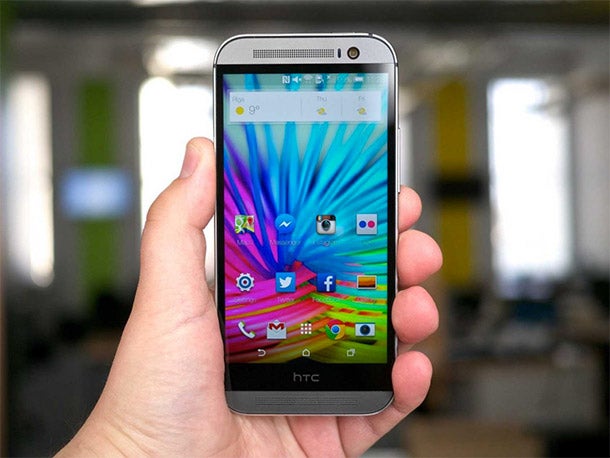
HTC set a new bar for Android device design when it launched the HTC One in 2013. It was the only phone that rivaled the iPhone in terms of looks and build quality. The second version launched this spring, and we expect the third iteration of the One to launch in March or April 2015.
The Oculus Rift will likely launch by the end of 2015.
Image credit: reiniciado.com
The Oculus Rift, a virtual reality headset that impressed Mark Zuckerberg so much he bought the company for $2 billion, is still in development but expected to launch by the end of 2015.
At first, the Oculus Rift will mostly be for gaming. But in the years to come people will be able to use the Rift for social networking, interactive movies, and virtual concerts.
Project Morpheus is Sony's take on a virtual reality headset. It's designed to work with the PlayStation 4 and will likely launch by the end of 2015.
A touch version of Microsoft Office for Windows.
Image credit: Microsoft
Microsoft Office is going to get an overhaul next year. The company is working on a new touch-friendly version of Office for Windows tablets and touchscreen laptops. It's similar to the new version of Office for the iPad and will likely launch around the same time as Windows 10 in 2015.
The next phone from OnePlus is guaranteed to be a big seller.
Image credit: Steve Kovach | Business Insider
Chinese startup OnePlus released a very impressive phone this year called the One. The Android device has all the best features as top-tier phones like the Samsung Galaxy S5, but only costs about $350.
The phone is insanely popular because you can usually only buy it with an invitation from the company. And OnePlus is already working on the next version, which should launch in the first half of 2015. According to sources, the new version will be customizable and might have a smaller screen.
Apple's $3 billion purchase of Beats Music means it now has access to a pretty good streaming service. Rumor has it Apple will integrate Beats Music into iTunes to make it a viable competitor to popular services like Spotify.
Pebble makes one of the best smartwatches you can buy. Its latest version, the Steel, launched in early 2014. We've heard that a new version is coming in early 2015.
A new Siri-type virtual assistant promises to be as useful as the problem-solving detective Sherlock Holmes (but it’s still small enough to fit in your pocket).
Developed by researchers at Cardiff University in the United Kingdom and IBM in the United States, the new software program expands on the question-and-answer approach taken by Siri, the virtual assistant that comes with Apple's iPhones and tablets, as well as Cortana, the digital intelligence system developed by Microsoft.
Instead of just searching the Internet (or other databases) for answers to users' questions, the new virtual-assistant software gathers scraps of information from various users, stores this information in a database and then eventually puts all the scraps together to answer queries. It's similar to how a detective collects clues to crack a case. The pocket-size sleuth is aptly named SHERLOCK, short for the Simple Human Experiment Regarding Locally Observed Collective Knowledge. [Super-Intelligent Machines: 7 Robotic Futures]
To get the information it needs, SHERLOCK uses "controlled natural language," a novel kind of machine-human language that makes communication between the software program and the user easier, according to the researchers who created the dialect.
SHERLOCK uses "controlled natural language" to communicate with users. Credit: Alun Preece
"By using controlled natural language, SHERLOCK builds a knowledge base of things it ‘knows’ in a form that’s understandable to humans and machines," said Alun Preece, a professor of intelligent systems at Cardiff University's School of Computer Science & Informatics. "You can ask it what it knows about, and tell it about things it doesn’t know about in natural language."
The controlled language makes it easier to fill in gaps in the software's knowledge, Preece told Live Science in an email. For example, if SHERLOCK keeps giving you driving directions to a location that you usually travel to by train, you can correct its behavior by saying, "I always take the train, SHERLOCK." Or, if your house is too cold (and you happen to have a smart thermostat), you don’t have to tell SHERLOCK to turn up the heat. All you have to say is, "I'm cold, SHERLOCK."
But the software program is actually more useful as a sort of coordinator of information than as a personal assistant. By combining information from multiple users, SHERLOCK creates a local database of facts that are then available to other people using the software. The software could really come in handy in places where large crowds are gathering — for instance, at music festivals or designated emergency evacuation sites.
"It can also ask people questions, like 'How big is the crowd at your location?' and then work out where are the smallest crowds from the responses," Preece said.
And because the program stores much of the information it gathers from users locally, on the users' cell phones, you don’t have to be connected to a wireless network to use the software, he added. That makes SHERLOCK really useful in situations in which networks might be down (such as during a storm) or jammed up and slow (such as during huge public gatherings).
The controlled natural language used by SHERLOCK is just one way to make communication between machines and humans easier. Earlier this year, researchers at the Massachusetts Institute of Technology (MIT) unveiled Siri-like softwarethat helps humans make more informed decisions by asking them questions about their priorities. For example, the software can calculate the best route to take to the airport depending on whether you're in a hurry or you would like to first stop at a five-star restaurant for dinner.
This year, the Defense Advanced Research Projects Agency (DARPA), the experimental arm of the U.S. military, also launched its Communicating with Computers(CwC) program, which aims to break down human-machine language barriers. In February, the agency unveiled a program that promotes the development of new communication methods that could be useful in fields like robotics and medical research.
Other researchers, including those at the University of Minnesota in Minneapolis, are bypassing language altogether by developing interfaces that let humans control technologies using only brainwaves.
There's almost no limit to the ways you can make money, but most of them require work (that particular balance is known as "the human condition"). However, there are ways to make extra cash without going too far out of your way. Here are a few.
A small disclaimer that should go without saying: nothing in here is going to make you rich or pay your bills. The idea is to make a bit of extra cash while you idle in the checkout line, in a waiting room, or without doing anything at all. With the exception of large capital investments or owning a business, most things won't make you a ton of money for that little effort. However, a few extra bucks here and there is still something, and if you add up everything here you could give your petty cash fund a nice pad. If you want to put a bit more effort in, there are plenty of ways to make even more money in your spare time.
The Federal Aviation Administration is cracking down on unauthorized drone flights.Earlier this week the body hit a commercial drone operator, SkyPan International, with a $1.9 million fine for illegal flights that took place over New York and Chicago. In order to monitor similar flights in the future, and to stop dangerous collisions between drones and aircraft, the administration has now signed an agreement to test technology that would help it find the operators of drones flying near airports.
THE TECH SCANS RADAR SIGNALS TO TRACK PILOTS
John Mengucci, president of the company providing the technology, said it "provides a proven way to passively detect, identify, and track" drone operators by monitoring the radio signals between drone and controller. As reports of pilots spotting drones increase — doubling between 2014 and the first eight months of 2015 alone — the FAA says finding and stopping unauthorized flights is increasingly difficult. "One of the biggest challenges we're having is locating the operator," FAA deputy administrator Michael Whitaker told the House Transportation and Infrastructure Committee on Wednesday.
The FAA faces criticism for its achingly slow progress towards unified legislation for drone operators. The administration was instructed to enshrine laws for drone use this year, but after the governmental body proposed surprisingly generous preliminary rules for hobbyist drone pilots earlier this year, it missed a September deadline for the full regulations. The FAA has acknowledged its slow progress, but has warned that it may take until 2017 to finalize its drone regulations. Until then, drone pilots will need to err on the side of caution to avoid being spotted by this new technology and hit with hefty fines.
We may have seen the first photos of the iPhone 6S, or at least of its case, showing a device which looks identical to the iPhone 6, as we'd expect with an S model.
However while it might have the same dimensions, a patent suggeststhere's a possibility that it could lose those plastic strips we know and hate. A Liquidmetal body is once again a possibility too, as Apple has extended its exclusivity deal with the maker.
On the other hand we're also hearing rumours the iPhone 6S / iPhone 7 might feature the lightweight and strong Series 7000 aluminium alloy it uses on the Apple Watch Sport. The iPhone 6S could be putting on weight too, as a new report suggests it will be 0.2mm thicker and 0.15mm taller than the iPhone 6, which could mean the camera lens will no longer protrude from the back.
A set of schematics have also emerged which again claim that the iPhone 6S is set to be 0.2mm thicker than the iPhone 6, but will otherwise look pretty much the same as last year's handset.
It could be getting a new colour scheme as well, as the gold version will apparently be more yellow than it is on the iPhone 6, the space grey version may be getting darker and a rose gold version is said to be on the cards, as well as a pink model.
There are numerous Apple patents in the wild which point to weird and wonderful designs, but haven't yet come to anything, such as more than one for a phone with a curved display, a little like the Galaxy Note Edge. It's possible that we could see that in the iPhone 6S, but we'd be very surprised, as it would be a risky move and Apple has only just redesigned its handsets.
New Clues Point To Amazon Unveiling A Phone
The Amazon phone is coming.
On Tuesday, we got the most substantial hint yet that the massive retailer is going to release its own phone, when The Wall Street Journal reported that the device will be exclusively carried by AT&T.
AT&T currently provides wireless Internet for Amazon's Kindle ereaders and tablets. Amazon is scheduled to unveil a new device at an event in Seattle on Wednesday.
There have been rumors about Amazon's first phone for a while now, but they were made a bit more concrete on June 4, when the company released a teaser video for Wednesday's unveiling. The video includes a glimpse of a phone-like device. If you watch closely, you can see the top of what looks like a phone around 0:42.
Earlier this week, The New York Times' David Streitfeld wrote that Amazon's phone looks like a new way for the retailer to "burrow even deeper into your life," since the mobile device would presumably make it easier for you to... buy things on Amazon.